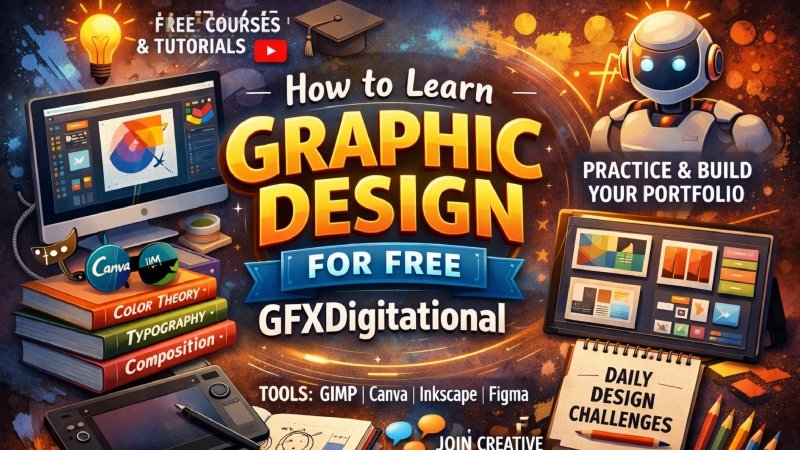
Graphic design is no longer limited to expensive courses or exclusive software. For ambitious creators and technical teams in the USA, understanding how to learn graphic design for free GFXDigitational is not just a convenience — it’s a competitive edge. With the right approach, anyone can master design fundamentals, build portfolios, and create professional-quality visuals without spending a dime. This article explores the best practices, tools, and strategies to help both individual users and teams achieve design excellence.
What Makes Free Graphic Design Learning Effective
Learning graphic design without paying for costly courses requires clarity, discipline, and structured practice. The core principle is that skill development matters more than tools. While software tools can accelerate productivity, they cannot replace an understanding of color theory, typography, and composition. By focusing on fundamentals first, users can adapt to any platform, whether it’s a free tool like Canva or a professional suite like Illustrator.
Understanding how to learn graphic design for free GFXDigitational also means committing to a consistent practice routine. Daily design exercises, small projects, and real-world challenges reinforce learning faster than passive watching or reading. Moreover, using free resources strategically allows both individuals and technical teams to optimize workflows without additional budget.
The Core Fundamentals You Must Master
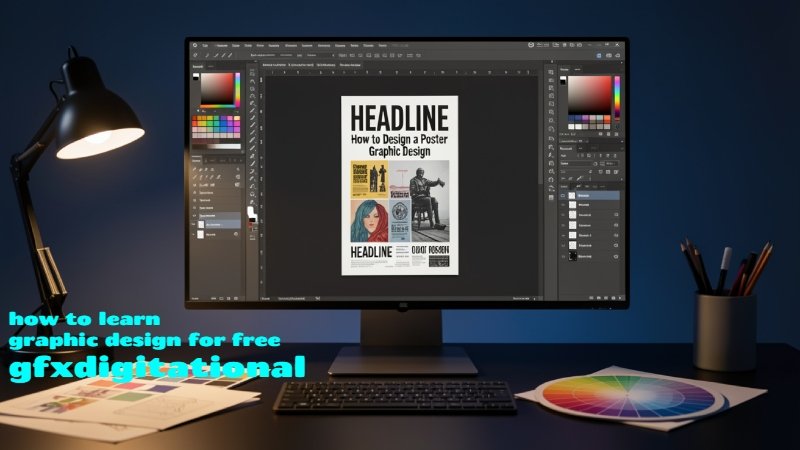
Before diving into software, aspiring designers need to understand the essential principles of visual design. These include color theory, which guides emotional impact and brand consistency; typography, which ensures legibility and visual hierarchy; composition, which balances elements on a page; and layout, which organizes information efficiently. Each fundamental builds the foundation for practical work, enabling users to make confident creative decisions even when using free tools.
Best Free Tools for Learning Graphic Design
Selecting the right tools is critical. The following table compares the most popular free platforms for learning graphic design:
| Tool | Strengths | Limitations | Best Use Case |
|---|---|---|---|
| Canva | User-friendly, extensive templates, fast learning curve | Limited vector control, less advanced typography | Social media posts, beginner-friendly graphics |
| GIMP | Powerful image editing, free alternative to Photoshop | Steeper learning curve, interface can be intimidating | Image manipulation, photo editing projects |
| Inkscape | Vector editing, full control over paths | Requires patience, learning curve for advanced features | Logo design, scalable vector graphics |
| Figma | Collaborative, strong layout tools | Limited offline functionality, some features require paid plan | UI/UX design, team workflows, poster layouts |
By mastering one primary tool first, learners can focus on developing skill over software proficiency, which accelerates growth.
Pros and Cons of Learning Graphic Design for Free
Pros:
-
Learning without financial barriers allows individuals to experiment, practice, and explore multiple tools without commitment.
-
Fosters creativity, self-discipline, and resourcefulness.
-
Free resources are abundant, including structured online courses, tutorials, and video lessons.
Cons:
-
Lack of formal instruction may cause slower progression for some learners.
-
Without structured feedback, beginners can develop habits that are difficult to correct later.
-
Overreliance on templates or AI tools can limit originality if not used strategically.
Step-by-Step Workflow for Free Graphic Design Mastery
The most effective approach combines structured learning with hands-on projects. Start by defining a small project and its purpose. Decide the key message and sketch a layout before opening any software. Then, choose a free tool that fits the project’s requirements. Begin designing, focusing on hierarchy, typography, and spacing. Finally, refine the design and seek feedback from peers or online communities. Repetition is critical: completing 30–50 projects will solidify skills faster than random attempts.
AI Tools and Idea Generators: Enhancing Creativity Safely
Free AI-powered design idea generators can help overcome creative blocks, but they must be used wisely. For example, prompts can guide the creation of posters, social media graphics, or typography experiments, but designers should maintain full control over composition and refinement. Treat AI as a sketch assistant, not a substitute for your creative decision-making.
Building a Portfolio That Demonstrates Real Skill
Your portfolio reflects growth, not just knowledge. Include varied projects such as event posters, product promotions, minimalistic designs, and typography-focused layouts. Avoid cluttered presentations; each piece should highlight specific skills and creative reasoning. For teams, creating a centralized portfolio allows managers to assess individual contributions and team workflow efficiency. Publicly sharing work on platforms like Behance or Dribbble also invites critique, accelerating improvement.
Technical Teams: Best Practices for Collective Learning
For technical teams, learning graphic design collectively provides additional advantages. Assign members to explore specific free tools, organize knowledge-sharing sessions, and implement weekly challenges to encourage consistent practice. Documenting team workflows ensures that everyone can replicate high-quality designs and maintain visual standards. This strategy maximizes output quality while minimizing the need for costly training or software licenses.
Where Designers Actually Improve
Improvement comes from practice, critique, and intentional challenges. Designers grow fastest when they analyze professional work, experiment under constraints, and accept constructive feedback. Daily micro-projects, timed exercises, and competitive challenges all accelerate skill acquisition. Teams can adopt this approach to standardize quality while fostering healthy internal competition.
FAQs
1. How long does it take to become confident in graphic design using free resources?
Consistent practice over 30–60 projects usually leads to noticeable improvement. Confidence typically develops after approximately 100 completed designs.
2. Which free tool is best for beginners in 2026?
Canva is ideal for beginners focusing on layouts and social media graphics. For vector work or advanced design, GIMP or Inkscape are better choices.
3. Can AI idea generators replace manual design practice?
No. AI should only be used for inspiration. The designer must maintain control over composition, typography, and refinement to ensure originality.
4. How can teams effectively learn graphic design together?
Divide responsibilities, share learning resources, conduct weekly challenges, and review each other’s work. Structured collaboration improves collective skill and workflow efficiency.
5. What common mistakes should beginners avoid?
Overcrowding designs with too many fonts, colors, or elements. Prioritize clarity, hierarchy, and simplicity to create impactful designs.
6. Is building a portfolio necessary if I only design for practice?
Yes. Even practice projects demonstrate growth, decision-making, and skill progression, making a portfolio a valuable tool for self-assessment and professional opportunities.
Conclusion: Take Action Today
Learning how to learn graphic design for free GFXDigitational is achievable with discipline, structured practice, and strategic tool usage. Start by mastering fundamentals, select the right free software, complete consistent projects, and actively build a portfolio. Individuals benefit from focused practice, while technical teams gain efficiency and scalability. Remember, tools cannot replace creativity, but consistent application of knowledge ensures mastery. Contact Us
Take action now: commit to one small design project every day for the next 30 days. Build, refine, and showcase your work. The results will compound, and within months, you can achieve professional-grade design skills — all without spending a single dollar.