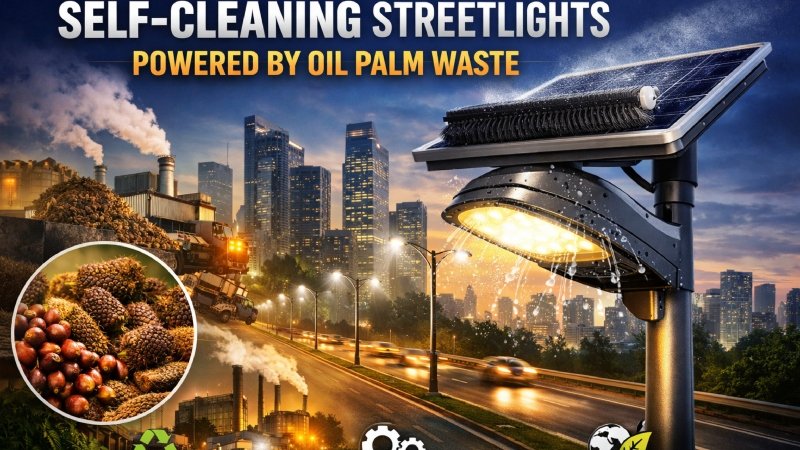
The concept of self cleaning streetlight oil palm waste is rapidly gaining attention across the United States as cities search for smarter and more sustainable infrastructure solutions. Street lighting consumes a significant portion of municipal energy budgets, and maintenance costs continue to rise due to environmental exposure, dust accumulation, and system inefficiencies.
What makes this technology unique is its ability to combine renewable energy from agricultural waste with automated cleaning systems that maintain performance without constant human intervention. This innovation is not just about saving energy. It is about creating a reliable, long-term lighting solution that reduces operational costs while supporting environmental responsibility.
What Is Self Cleaning Streetlight Oil Palm Waste?
A self cleaning streetlight oil palm waste system is an advanced lighting solution that integrates biomass energy derived from oil palm waste with automated cleaning technology. The system is designed to operate efficiently in outdoor environments where dust, pollution, and weather conditions typically reduce performance.
Oil palm waste, including residues such as shells and fibers, is converted into usable energy through biomass processing. This energy powers LED streetlights, often supported by solar panels for hybrid functionality. The self-cleaning feature ensures that lighting surfaces remain free from dirt, maintaining brightness and efficiency over time. This combination creates a highly efficient, low-maintenance lighting system suitable for modern infrastructure projects.
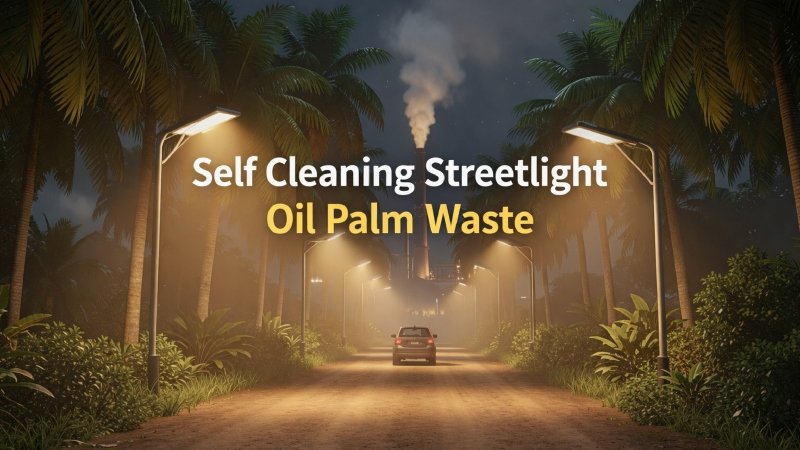
How the Technology Works
Understanding how self cleaning streetlight oil palm waste systems operate requires looking at two key components: energy generation and automated cleaning.
Energy Generation from Oil Palm Waste
Oil palm waste is processed into biofuel or biogas through biomass conversion methods. This energy is then used to power the lighting system, either independently or alongside solar panels. The hybrid approach ensures continuous operation even during periods of low sunlight.
Automated Self-Cleaning Mechanism
The cleaning system relies on advanced surface technology and mechanical support. Hydrophobic coatings prevent dirt from sticking to surfaces, while photocatalytic materials break down organic particles using sunlight. In some designs, small mechanical systems remove debris automatically.
This dual approach ensures that the system maintains high efficiency without requiring frequent manual cleaning.
Key Components of the System
A typical self cleaning streetlight oil palm waste setup includes several integrated components that work together seamlessly.
| Component | Function |
|---|---|
| LED Lighting Unit | Provides high-efficiency illumination |
| Biomass Energy System | Converts oil palm waste into usable power |
| Solar Panel | Supports hybrid energy generation |
| Battery Storage | Stores energy for nighttime use |
| Smart Sensors | Control lighting and optimize performance |
| Self-Cleaning Surface | Prevents dust accumulation |
This integrated design allows the system to function autonomously with minimal intervention.
Benefits for USA Infrastructure
The adoption of self cleaning streetlight oil palm waste technology offers several advantages, particularly for cities and rural areas in the United States. One major benefit is reduced maintenance. Traditional streetlights require regular cleaning and inspection, which increases operational costs. Automated cleaning systems significantly reduce this burden.
Another advantage is energy efficiency. By using renewable energy sources, municipalities can lower electricity consumption and reduce dependence on traditional power grids. The system also supports environmental goals. Converting agricultural waste into energy helps reduce landfill use and carbon emissions. This aligns with sustainability initiatives across many US states.
Additionally, the system is highly reliable. Hybrid energy generation ensures consistent performance even in varying weather conditions.
Pros and Cons of the System
The advantages of self cleaning streetlight oil palm waste technology make it attractive, but it is important to understand both sides.
The system offers long-term cost savings by reducing maintenance and energy expenses. It improves lighting efficiency by keeping surfaces clean and supports sustainability by using renewable resources. It also performs well in remote areas where grid access is limited.
However, there are challenges. Initial installation costs are higher compared to traditional lighting systems. The technology requires proper integration and technical expertise. Sustainable sourcing of oil palm waste is also essential to ensure environmental benefits.
Despite these limitations, the long-term value often outweighs the initial investment.
Best Practices for Individual Users and Technical Teams
For successful implementation of self cleaning streetlight oil palm waste, both individual users and technical teams must follow specific best practices. Individual users should ensure proper installation in areas with adequate sunlight exposure if solar support is included. Regular system checks, even if minimal, help maintain performance over time.
Technical teams should focus on system design and integration. Selecting high-quality components and ensuring proper energy conversion processes are critical. Monitoring system performance through sensors and data analysis can help detect issues early and improve efficiency. Both users and teams must also prioritize safety. Handling biomass energy systems requires adherence to safety standards, and proper training is essential for maintenance and operation.
Real-World Applications
In the United States, self cleaning streetlight oil palm waste systems are being explored for multiple applications. Urban areas benefit from reduced maintenance costs and improved efficiency. Rural communities gain access to reliable lighting without needing extensive grid infrastructure. Industrial zones can use these systems to manage waste while improving operational sustainability.
These applications highlight the flexibility and potential of this technology across different environments.
Future Potential and Innovation
The future of self cleaning streetlight oil palm waste technology is closely tied to advancements in smart infrastructure. Integration with IoT systems will allow real-time monitoring and control, improving efficiency and reliability. Artificial intelligence may also play a role in optimizing energy usage and maintenance schedules. As research continues, materials derived from oil palm waste could become more durable and efficient, further enhancing system performance.
This innovation represents a step toward smarter and more sustainable cities in the United States.
Frequently Asked Questions
What is self cleaning streetlight oil palm waste used for?
It is used to provide sustainable and low-maintenance street lighting powered by renewable energy.
How does the self-cleaning feature work?
It uses coatings and automated systems to remove dust and maintain efficiency without manual cleaning.
Is this technology suitable for US cities?
Yes, it can be adapted for both urban and rural areas across the United States.
What is the lifespan of the system?
Most systems last between 15 and 20 years with proper maintenance.
Is oil palm waste environmentally friendly?
It is sustainable when sourced responsibly and used in renewable energy systems.
Conclusion
The rise of self cleaning streetlight oil palm waste technology marks a significant shift in how modern lighting systems are designed and maintained. By combining renewable energy with automated cleaning, this system offers a powerful solution to common challenges such as high maintenance costs and energy inefficiency.
For cities, developers, and technical teams in the United States, adopting this technology can lead to long-term savings, improved performance, and stronger environmental outcomes. However, proper planning, safe installation, and responsible sourcing are essential to maximize its benefits.